March 7, 2023

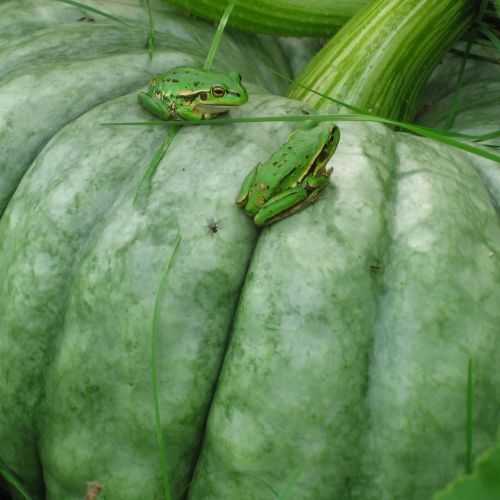
And now there are three . . .

Green and gold frogs that is. In the bathtub near the small greenhouse-cum-potting shed that’s been a haven for green and golds for several years, and is also a water source for thirsty birds when they don’t fancy drinking or preening their feathers in the bird bath.


The latest wildlife rescue was a large frog who’d gone exploring in the raspberry patch, and then couldn’t work out how to negotiate the netting to extricate herself. We’re sure it’s a ‘she’ because of her size. Female GGs are bigger than the males. Rescue accomplished the obvious solution was to plonk her in the bathtub to join the two frogs already there. At least we think they’re both still there but days can go by when we don’t see them so it’s hard to be certain. Then just as we’ve decided they must have hopped off to pastures new, suddenly there they are, basking on the side of the tub, or hanging onto the wire netting that covers some of the tub, while enjoying the view. Neither of them seem too fazed when we walk past now so assume they’re got used to us and realise we pose no threat. Hopefully they’ll also get along with ‘big mamma’.


Heartening though it is to have seen and heard some GGs this summer, and been able to rescue a couple of them, we’ve not seen as many as usual. Not even squashed ones on the road – roadkill victims when they’ve been out partying in the rain.


It would be easy to lay the blame at the door of development for the apparent loss of these frogs given so much former farmland in the area has been sold for residential housing. It’s known that disease can all too readily be introduced through heavy vehicle movements, and on the soles of boots, and the amphibian fungus disease known as chytrid is still very much a concern around the world.


We’ll just have to cross our fingers and hope our ancient bathtub is providing a sanctuary for at least three green and golds, and they’ll choose to overwinter there, ready for breeding again come the spring.

Share this post on socials

Magni
By Anne Layton-Bennett June 14, 2026
It’s taken far too many months for this marvellous model to grace the dedicated desk space in my office. When Fiona comes to visit next she will be very surprised, and hopefully gratified, that her amazing creative talent is finally on display. We’ve known each other for a very long time, and during the insanely busy time when I was helping to run the flower farm, working part-time in a school library, doing a spot of journalism on the side, and fighting the proposed pulp mill that is the subject of the manuscript I’m hoping to get published, Fiona cleaned my house each week. There’s only so much a person can do after all, and it has to be said cleaning our house during those manic years was fairly low down on the list of my priorities. But Fiona is a woman of many talents and she certainly possesses one that I so don’t have: sewing and dressmaking. So over the years she’s also made a few garments based on the pattern of a favourite garment that I was particularly fond of, and she’s also done some clothing alterations for both of us. My skills with needles and thread are limited to sewing on buttons, and taking up hems on John’s too-long pairs of jeans. Anything else is beyond me. But this fabulous model is the pièce de résistance – along with the beautiful crocheted knee warmer she gave me last year. This was when winter was approaching and so determined was I to finish writing the book, I decided to get out of bed at the insane hour of 5am and get in a solid hour’s writing in before dog walking and the demands of the day took over. Fiona was also one of many Tasmanians who needed to be circumspect about her opinion of the pulp mill. It was a project that polarised people, including families and friendships. She was one of several who passed on snippets of useful information, but on the basis of anonymity so it couldn’t be sheeted home to her.  Needless to say Fiona will be one of those whose contribution will be acknowledged – when this book is finally accepted by a publisher.
By Anne Layton-Bennett June 8, 2026
Early lambing season a sign of changing seasons? Or economic reality?
By Anne Layton-Bennett May 18, 2026
Changing climate is affecting plants, and they are increasingly confused by a warming world. Yet despite the warnings by scientists about the risks of more frequent weather extremes, governments are still failing to act quickly enough.

Latest from my blog...