February 12, 2017

Bruny Island, and red flowering gums

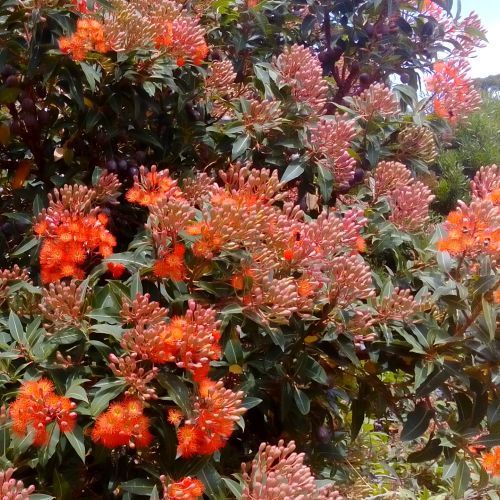
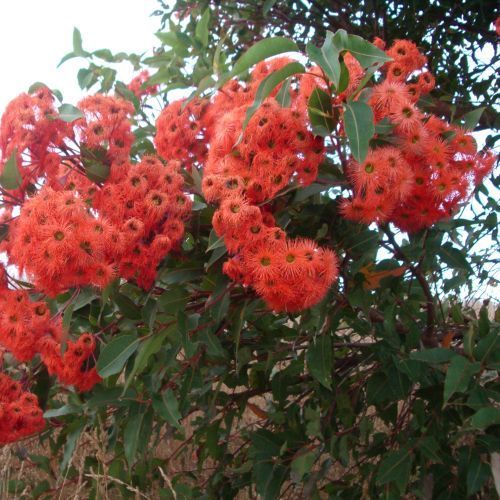
The Eucalyptus ficifolia, or red flowering gums, are beginning to break out in blossom and I’m reminded of our Bruny Island trip last year, and the stunning tree we saw in a garden there while walking down to the jetty to join the Pennicott cruise boat. Tickets to the cruise were the result of a successful bid in a silent auction fundraiser in the aftermath of the April 2015 Nepal earthquake. I still have no idea if I paid over the top for them, or got a really good deal, and it doesn’t matter anyway because goodness knows, the cause was worthy, and the trip more than lived up to expectations. Talk about a wild ride, and thank goodness for the industrial strength waterproof ponchos that were provided – an essential garment given the soaking that was par for the course, even on a fine day!
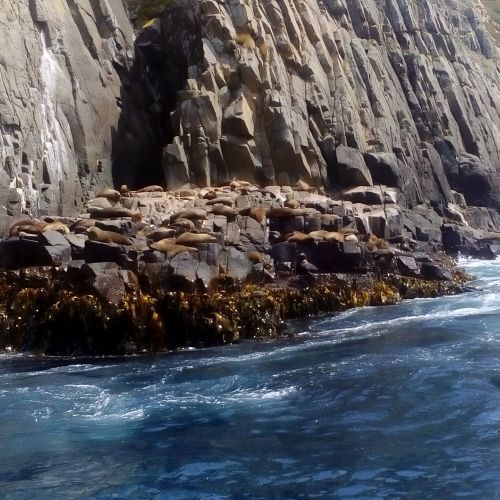
No guarantees are given about spotting the marine wildlife that abounds in this remote southern Tasmanian coastal region. It’s pure luck as to which species are around on the day, but sadly no dolphins came out to play the morning we went. The colony of Australian fur seals though were another kettle of fish – if you’ll excuse the pun. The rocky outcrops that characterise this region are where the male of the species hang out.


They are batchelors for much of the year, only getting together with the females when it’s time to mate. The boys, both old and young, were plentiful and in full voice. And odour! These fur seals are a federally protected species, and although ungainly and cumbersome while moving about on the rocks, in the water, where the mostly youthful members were having a high old time diving, frolicking, fishing and playing about, it was a different story. There they were sleek, swift and totally at home.


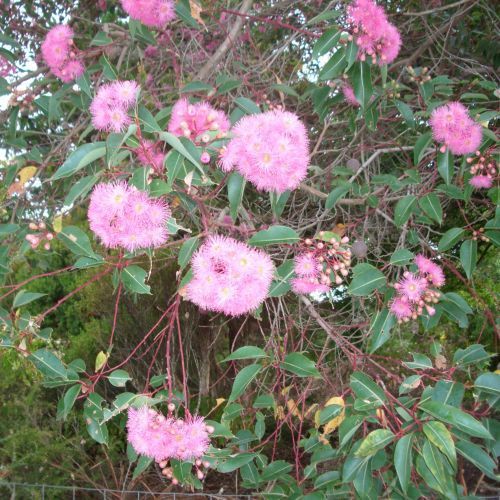
But, back to the ficifolia. Although the species is always referred to as red flowering, in fact I’ve seen colours around home ranging from the magificent tree we had at our previous property, which was a beautiful soft peach, to the pink, salmon pink, and red versions we have on our current one.

The rich orange of the Bruny specimen was entirely new to us, and naturally my green fingered, native tree-loving partner just had to try and find some seed. Ahem, we did too, without any serious need to trespass (nobody was home, we did check!), and 12 months on there are now two small ficifolias growing well. Because their parent produced orange blossom, I’m assured its offspring will too. Here’s hoping – although quite where they will eventually be put in our increasingly over-crowded garden remains to be seen.
Share this post on socials

By Anne Layton-Bennett July 22, 2026
Attracting the interest of a publisher for this story of a community’s campaign to stop what would have been ‘the world’s fourth largest pulp mill’ being built was never going to be easy, but hoping the first of two 3-minute Literary Speed Dating pitch sessions will prompt at least one of the two publishers to request the full MSS. And preferably both of them. These twice-yearly Perfect Pitch sessions are offered to members of the Australian Society of Authors, and this is the first time I’ve taken advantage of them – mainly because of the need to have a completed MSS before doing so. Three minutes isn’t long to excite the interest of a publisher who is after stories in very specific genres, and who therefore needs to believe your MSS is worth investing the time needed to read it in full. I’m pretty certain I’ve excited the necessary interest, but given Jane will hear the pitches of many more optimistic and talented writers after my morning session today, there are no guarantees. That initial interest might well wane as the day goes on if other writers have written stories that sound far more intriguing – and marketable. One can never forget that aspect of publishing these days: will the book sell. I believe my story will – certainly in Tasmania it definitely will – but a wider Australian readership? That’s an unknown even if my mentor is convinced of the story’s universal appeal.  I’d certainly like to think I’ve caught the zeitgeist wave given the current widespread community unrest over AI data centres, that’s already prompting similar serious opposition, and for many of the same reasons the Tamar Valley’s community opposed the pulp mill. Environmental degradation, threats to public health, water usage – and water shortages in an era of escalating climate extremes – and the constant, relentless noise factor that’s associated with data centres, and AI data centres in particular. I’m crossing my fingers that the second pitch session will be equally positive, and that I could strike it lucky with both publishers requesting to see the full MSS. But I won’t get ahead of myself. I’ll just be keeping all fingers and toes firmly crossed for the next seven days.
Magni
By Anne Layton-Bennett June 14, 2026
It’s taken far too many months for this marvellous model to grace the dedicated desk space in my office. When Fiona comes to visit next she will be very surprised, and hopefully gratified, that her amazing creative talent is finally on display. We’ve known each other for a very long time, and during the insanely busy time when I was helping to run the flower farm, working part-time in a school library, doing a spot of journalism on the side, and fighting the proposed pulp mill that is the subject of the manuscript I’m hoping to get published, Fiona cleaned my house each week. There’s only so much a person can do after all, and it has to be said cleaning our house during those manic years was fairly low down on the list of my priorities. But Fiona is a woman of many talents and she certainly possesses one that I so don’t have: sewing and dressmaking. So over the years she’s also made a few garments based on the pattern of a favourite garment that I was particularly fond of, and she’s also done some clothing alterations for both of us. My skills with needles and thread are limited to sewing on buttons, and taking up hems on John’s too-long pairs of jeans. Anything else is beyond me. But this fabulous model is the pièce de résistance – along with the beautiful crocheted knee warmer she gave me last year. This was when winter was approaching and so determined was I to finish writing the book, I decided to get out of bed at the insane hour of 5am and get in a solid hour’s writing in before dog walking and the demands of the day took over. Fiona was also one of many Tasmanians who needed to be circumspect about her opinion of the pulp mill. It was a project that polarised people, including families and friendships. She was one of several who passed on snippets of useful information, but on the basis of anonymity so it couldn’t be sheeted home to her.  Needless to say Fiona will be one of those whose contribution will be acknowledged – when this book is finally accepted by a publisher.
By Anne Layton-Bennett June 8, 2026
Early lambing season a sign of changing seasons? Or economic reality?

Latest from my blog...