January 11, 2021

Dear Boysenberries

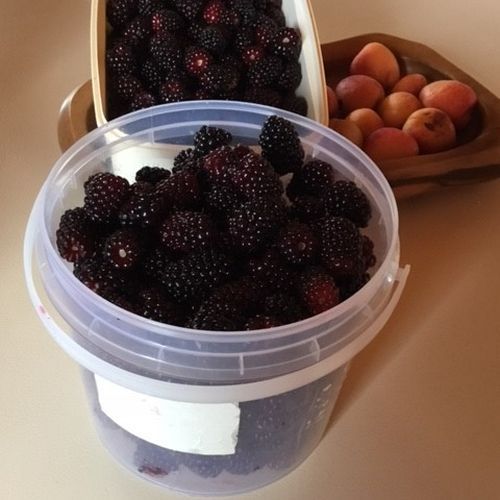
You’ve made your point. Great effort, and trust me, it’s appreciated. You’ve outdone yourselves this year and produced the best crop we’ve ever had, but truly, I won’t mind if you ease up a little now. I won’t be offended. Honestly. It’s always great when the first luscious berries on your bushes ripen, and eating them is always a joy. But after a month or more, I’m a little over the need to don a long-sleeved top each morning in order to brave the vicious thorns and prickles that are the decided downside of harvesting your delicious fruit. The scratches and splinters on my hands and forearms are testimony to this painful reality, so a month on, while production has definitely slowed up, I confess to looking forward to the day – like never before – when I can call it quits, leave the tiny few berries that are left to the birds, and devote an hour or so to removing splinters with a sterilised needle.

I could, of course, have called it quits days ago. After all, the freezer is already well stocked with your largesse – and thank you, we certainly won’t be running out of berries for winter crumbles this season – jars of jam line the pantry shelves; friends and neighbours have all been grateful recipients of your bounty; and we’ve happily gorged on your berries every day for weeks. But despite all this preserving, and laying down for winter months ahead, my northern hemisphere upbringing won’t allow me to just ignore the late ripening fruit still gracing your bushes. Perhaps it’s a case of genetic memory when winters were longer, and more severe than they are in Tasmania, and the need to preserve and store food was greater.

Whatever, harvesting produce will be part of my life for the next few months, since when your berries finally finish, your raspberry relatives will still be producing. So will your cousins, the wild blackberries. Hot on the heels of all the berry family will be the tomatoes. And then the apples and pears. And so the year turns.

Share this post on socials

Magni
By Anne Layton-Bennett June 14, 2026
It’s taken far too many months for this marvellous model to grace the dedicated desk space in my office. When Fiona comes to visit next she will be very surprised, and hopefully gratified, that her amazing creative talent is finally on display. We’ve known each other for a very long time, and during the insanely busy time when I was helping to run the flower farm, working part-time in a school library, doing a spot of journalism on the side, and fighting the proposed pulp mill that is the subject of the manuscript I’m hoping to get published, Fiona cleaned my house each week. There’s only so much a person can do after all, and it has to be said cleaning our house during those manic years was fairly low down on the list of my priorities. But Fiona is a woman of many talents and she certainly possesses one that I so don’t have: sewing and dressmaking. So over the years she’s also made a few garments based on the pattern of a favourite garment that I was particularly fond of, and she’s also done some clothing alterations for both of us. My skills with needles and thread are limited to sewing on buttons, and taking up hems on John’s too-long pairs of jeans. Anything else is beyond me. But this fabulous model is the pièce de résistance – along with the beautiful crocheted knee warmer she gave me last year. This was when winter was approaching and so determined was I to finish writing the book, I decided to get out of bed at the insane hour of 5am and get in a solid hour’s writing in before dog walking and the demands of the day took over. Fiona was also one of many Tasmanians who needed to be circumspect about her opinion of the pulp mill. It was a project that polarised people, including families and friendships. She was one of several who passed on snippets of useful information, but on the basis of anonymity so it couldn’t be sheeted home to her.  Needless to say Fiona will be one of those whose contribution will be acknowledged – when this book is finally accepted by a publisher.
By Anne Layton-Bennett June 8, 2026
Early lambing season a sign of changing seasons? Or economic reality?
By Anne Layton-Bennett May 18, 2026
Changing climate is affecting plants, and they are increasingly confused by a warming world. Yet despite the warnings by scientists about the risks of more frequent weather extremes, governments are still failing to act quickly enough.

Latest from my blog...